

 Image 1 of 1
“The hard skills may get you into leadership. The human skills determine whether anyone wants to follow you.”
The Human Side of Leadership
Before moving fully into therapeutic and meditative work, I worked internationally with Philips Healthcare in Asia Pacific, where the experiential training I developed for my own teams later attracted participants from across the organisation. What stayed with me most was seeing people from very different cultures stop protecting their own patch and begin working as one team. The work I offer organisations now has grown from that same interest in what helps people perform well together, with many more years of experience of practices in self-awareness, relationships and emotional intelligence behind it.
Good leadership asks a lot of a person. You need to stay clear when the pressure rises, bring people with you rather than simply tell them what to do, and create enough space for new ideas to emerge rather than constantly reaching backwards for what has worked before.
Those three things sound simple enough, but they are often where even very capable leaders come unstuck. Pressure turns into reactivity. Relationships become strained or people stop saying what they really think. And creativity gets squeezed out by fear, habit, hierarchy or the need to get everything right.
This programme works with those three areas directly.
Through highly unconventional, experiential workshops that grew out of my experience in the Eastern approaches to wellbeing, I support people notice what happens in themselves, how that affects others, and what becomes possible when they respond with greater awareness.
The three workshops can be taken separately, or brought together as a complete leadership programme.
THE HUMAN SIDE OF LEADERSHIP
-
1. Stress, Pressure & Self-Regulation
How to recognise and regulate stress before it begins to run the show. Learning to stay well, clear and connected, especially when the pressure is on
-
2. Moving Hearts & Minds
How emotional intelligence, self-awareness and compassion shape the way people trust, engage with and respond to leadership.
-
3. Vision, Creativity & Original Thinking
How to create the conditions in which people can think more freely, contribute more honestly and build something together that none of them could have created alone.
1. Stress, pressure & self-regulation
Learning to stay well, clear and connected when the pressure is on
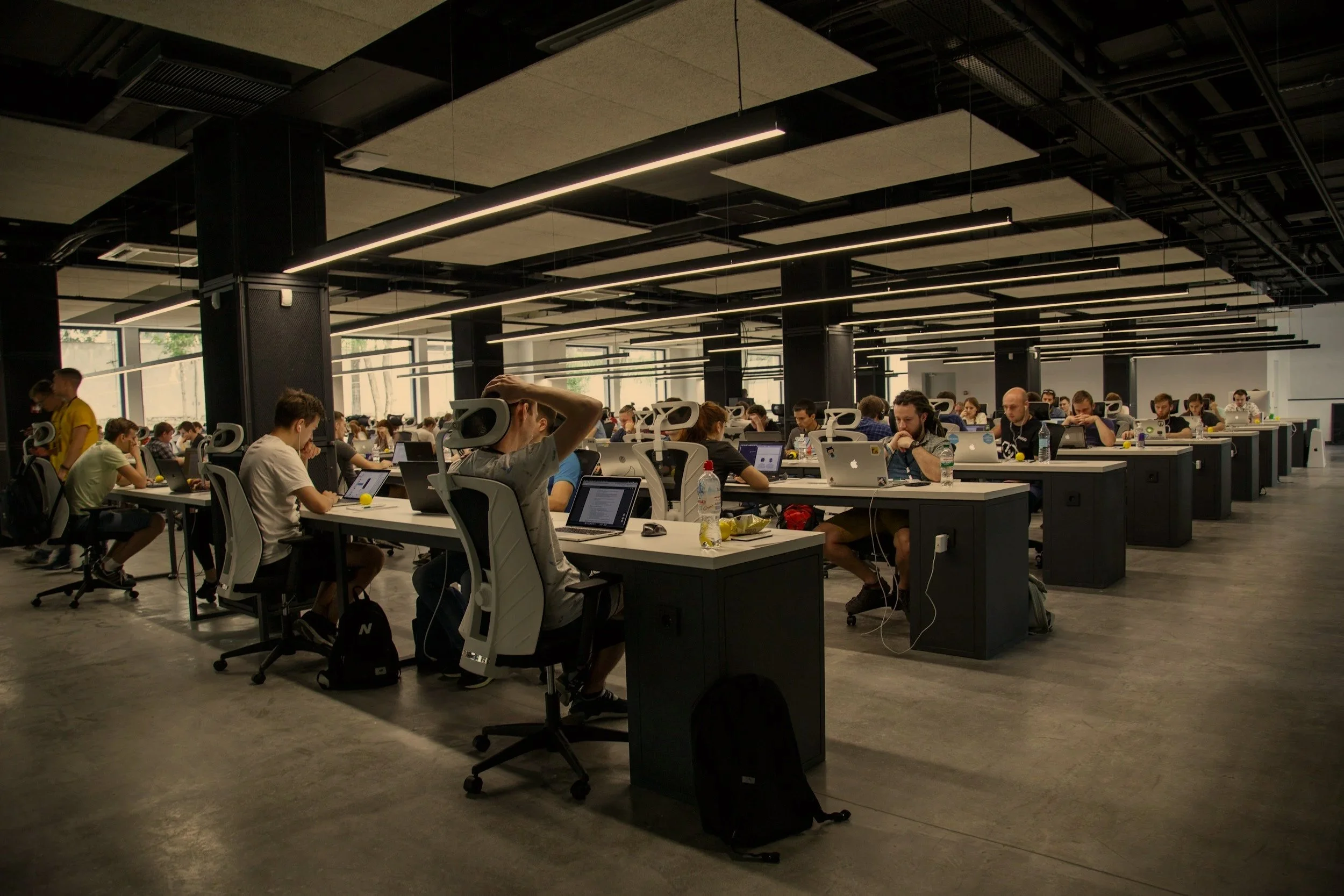
Most organisations spend a great deal of time and money maintaining the systems they depend on. Computers are serviced, equipment is checked, software is updated and anything broken, or unreliable is quickly investigated.
People’s capacity to function in a healthy way is often treated rather differently.
We expect ourselves to keep going through increasing workloads, difficult decisions, constant information, interpersonal pressure and change, and then wonder why people become exhausted, reactive or disengaged.
This workshop is a kind of human maintenance, although that perhaps makes it sound much less interesting than it actually is. This is not a course about learning to sit quietly and breathe and hoping the pressure has gone away. The pressure is part of the work. Here, participants get to experience what happens in themselves when they become stressed or emotionally charged, and learn how to recognise and regulate that state rather than simply trying to manage the consequences afterwards.
We look at what happens to attention, thinking and behaviour under pressure, but also at what happens within between people when they are charged, we how we affect the room. Most of this happens without us consciously deciding to do it. This workshop makes those patterns visible in a light and experiential way, so people can recognise their own stress responses without feeling analysed or judged, and discover what helps them come back into balance.
Stress management can easily become another task: something we are supposed to do better. The emphasis here is on self-regulation moment to moment.. Self-regulation is more immediate. It is learning to recognise when your system has become overloaded or reactive and knowing how to return to a state where you can think, communicate and make decisions more clearly.
That becomes particularly important for leaders, because their influence to affect others is far greater. A stressed leader can spread pressure through an entire team without saying very much at all. Equally, someone who can remain grounded when things become difficult often changes the atmosphere around them simply by not adding more charge to it.
The aim is not to turn people into permanently calm human beings. It is to give them enough awareness and practical experience to recognise what happens when the pressure rises, regulate themselves more effectively, and recover more quickly when they do get knocked off balance. That has an impact not only on wellbeing, but on judgement, relationships, conflict and the quality of the decisions people make when those decisions matter most.
2. Moving Hearts & Minds
There is a huge amount of emphasis placed on the hard skills of leadership; strategy, analysis, decision-making, targets, performance, vision. All of these matter, of course, but they only get you so far if the people around you are disengaged, afraid to speak honestly, or simply sitting in another meeting politely waiting for you to stop talking.
Most of us have experienced both kinds of leader. The one who can enter a room and somehow make people want to contribute, and the one who can present an excellent plan while everyone quietly bites their lip to stay awake. The difference isn’t usually intelligence.
It is the ability to connect with people. Great leadership is about relating.
This workshop explores emotional intelligence what allows a good leader to become a much more effective one; self-awareness, authenticity, empathy and compassion, together with an understanding of how your own way of relating affects the people you lead. People are far more likely to give their energy, ideas and commitment when they feel listened to, respected and trusted. They are also far more likely to hold back when they believe disagreement will be punished, their contribution won’t matter, or the answer has already been decided before they enter the room.
The difficulty is that leaders are rarely taught how to recognise any of this in themselves. They may have spent years becoming excellent at their profession and then find themselves responsible for motivating other human beings, each with their own personalities, fears, ambitions, sensitivities and opinions. And that is a very different skill.
Through practical exercises, we explore some of the places leaders commonly get caught: needing to have the answer, listening while secretly preparing a response, becoming defensive when challenged, avoiding difficult conversations, trying too hard to be liked, or unintentionally creating an atmosphere where people learn not to say what they really think.
What changes is the quality of the relationship.
The workshop draws on research into emotional intelligence and leadership, but rather than simply explaining what great leaders do, we turn those ideas into experiences so participants can notice for themselves what creates trust, what closes people down, and what genuinely inspires others to want to contribute.
Because ultimately, leadership is not just about having the skills or even a vision. It is about whether anybody wants to come with you.

3. Vision, Creativity & Original Thinking
Most organisations say they want innovation. What they often mean is: Please innovate — but don’t make anyone uncomfortable, don’t fail, don’t waste time, don’t challenge the hierarchy, and ideally have the business case finished by Friday.
That makes genuine creativity quite difficult. Original ideas rarely arrive neatly and on time. They often begin as an impulse, a half-formed thought, something slightly odd, or an idea that only becomes interesting once somebody else adds to it.
This workshop explores what helps that kind of thinking happen, both individually and within a team. The work is experiential and uses creative exercises to take people out of their usual way of thinking. The point is not to teach people how to be “creative” - we are all creative beings. It is to let them notice what is blocking them - what happens inside themselves when there is no obvious right answer.
Do they compare themselves with other people? Do they hesitate because the idea might be stupid? Do they become attached to their own contribution and stop listening to everybody else? Do they try to make something perfect before it has had a chance to become interesting? Or do they wait for someone more senior to decide what should happen next?
These are very ordinary human responses, but they can quietly kill creativity in a team.
Through unconventional art-based exercises, participants get to experience the difference between trying to force an idea and allowing something more spontaneous to emerge. They also experience what happens when individual ideas are allowed to meet, change and combine rather than competing to become the one that wins.
A good creative team is not simply a room full of clever people with ideas. It is a group of people who feel safe enough to offer something unfinished, curious enough to be changed by somebody else’s perspective, and flexible enough to let go of an idea they may have become attached to. The workshop creates space for exactly that. There is still structure and purpose, but there is also room for play, experiment and not knowing. And that matters, because creativity doesn’t come from repeating what we already know.
The aim is to help people become more aware of what limits their own creative thinking, while also exploring what allows a team to think together without hierarchy, comparison or perfectionism shutting the process down. When that happens they can produce ideas that none of them could have arrived at alone.
-
Why experiential training?
People rarely change because somebody gives them another PowerPoint slide, they change when they see something about themselves directly. That is why the work is experiential.
Participants do not simply learn about stress, communication or vision. They notice what happens in themselves while they are working, relating and making decisions.
A participant may recognise exactly what happens to them when challenged. A manager may notice how quickly they move into giving instructions instead of listening, or see the moment where hierarchy shuts down honest contribution.
Once something becomes visible, there is more choice, and that is actually where change begins.
-
Designed around your organisation
I don’t offer a fixed corporate package that gets delivered in exactly the same way everywhere. The work can be adapted around the people, culture and challenges of the organisation.
That may mean a one-off leadership workshop, a short series, a team development day, an executive group, or a longer programme built around a particular organisational need. Training sessions can be delivered in person or online.
The work is particularly suited to leadership teams, healthcare environments, people working under sustained pressure, and organisations that value emotional intelligence, collaboration and thoughtful decision-making.
-
Leadership that people can feel
The most effective leaders I have known were not necessarily the loudest, the cleverest or the most charismatic.
They were people who could stay steady when things became difficult, who made others feel that their contribution mattered, and who created enough trust for people to think, question and bring something of themselves to the work.
That is really what these workshops are developing.
The ability to regulate yourself rather than pass pressure down the line.
The ability to inspire people rather than simply manage them.
And the ability to make enough room for something new to emerge.
Because leadership is not only about having the answers. It is also about the kind of environment you create around you, and what becomes possible for other people inside it.
The programme can be adapted for leadership teams, managers, healthcare professionals or wider organisational groups, and can be delivered as individual workshops or as a connected series.
Frequently Asked Questions
-
The Human Side of Leadership is an experiential leadership development programme focused on the human capacities that most strongly affect how people lead, relate and perform under pressure.
The programme develops three core areas: self-regulation, emotional intelligence and relational leadership, and creativity and original thinking.
-
The programme is built around three workshops:
1. Stress, Pressure & Self-Regulation
Learning to recognise and regulate stress before it begins to affect judgement, behaviour and relationships.2. Moving Hearts & Minds
Developing the self-awareness, empathy, authenticity and relational skills that help leaders build trust and engage others.3. Vision, Creativity & Original Thinking
Exploring what helps individuals and teams think more freely, contribute more honestly and create ideas together without hierarchy, perfectionism or fear shutting the process down.The workshops can be taken separately or combined as a complete leadership programme.
-
The work is experiential rather than primarily theoretical.
Participants do not simply learn concepts about stress, emotional intelligence or creativity. They observe what actually happens in themselves while working, relating, making decisions and responding to challenge.
This makes unconscious habits more visible and gives people a practical opportunity to respond differently in real situations.
-
Self-regulation means recognising when stress, pressure or emotional charge is beginning to affect your thinking and behaviour, and knowing how to return to a clearer and more balanced state.
This is especially important for leaders because their emotional state can influence the atmosphere and behaviour of an entire team.
-
The programme helps leaders become more aware of how they listen, respond to challenge, handle disagreement and affect the people around them.
Participants explore patterns such as defensiveness, avoiding difficult conversations, needing to have the answer, trying too hard to be liked, or unintentionally creating an environment where people stop speaking honestly.
-
The creativity workshop explores the internal and interpersonal patterns that can block original thinking, including comparison, perfectionism, fear of failure, attachment to ideas and excessive hierarchy.
Through experiential and art-based exercises, participants practise creating the conditions in which unfinished ideas can be shared, developed and combined rather than judged too quickly.
-
The programme is particularly suited to leadership teams, managers, healthcare professionals, executive groups and organisations working under sustained pressure.
It is also relevant to organisations that want to strengthen emotional intelligence, collaboration, trust, creativity and thoughtful decision-making.
-
Yes.
The programme is not delivered as a fixed corporate package. Workshops can be adapted around the culture, people and current challenges of the organisation.
This may involve a one-off workshop, a short series, a team development day, an executive group or a longer leadership programme.
-
Yes. The training can be delivered in person or online, depending on the needs of the organisation.